.webp)
🚩AHU Red Flags
When Should an AHU Be Evaluated or Serviced?
Key Indicators Your Air Handling Unit Needs Attention:
-
Uneven airflow or temperature complaints
-
Excessive noise or vibration from the unit
-
Dirty coils or frequent filter loading
-
Control or zoning issues across spaces
-
Rising energy use tied to air distribution
Air handling units are central to airflow and comfort. When performance degrades, the effects are felt throughout the building—often long before the unit completely fails.
Uneven Airflow
Air distribution is unbalanced or the AHU is no longer delivering designed airflow.
Noise or Vibration
Fan, bearing, or alignment issues may be developing inside the unit.
Dirty Coils or Filters
Air quality and heat transfer are being compromised within the AHU.
Control Issues
The AHU is not responding correctly to zoning or building automation signals.
Higher Energy Use
The unit is working harder to overcome airflow or control inefficiencies.

All Your Air Handling Needs.
One Reliable Team.

What Is an Air Handling Unit (AHU)?
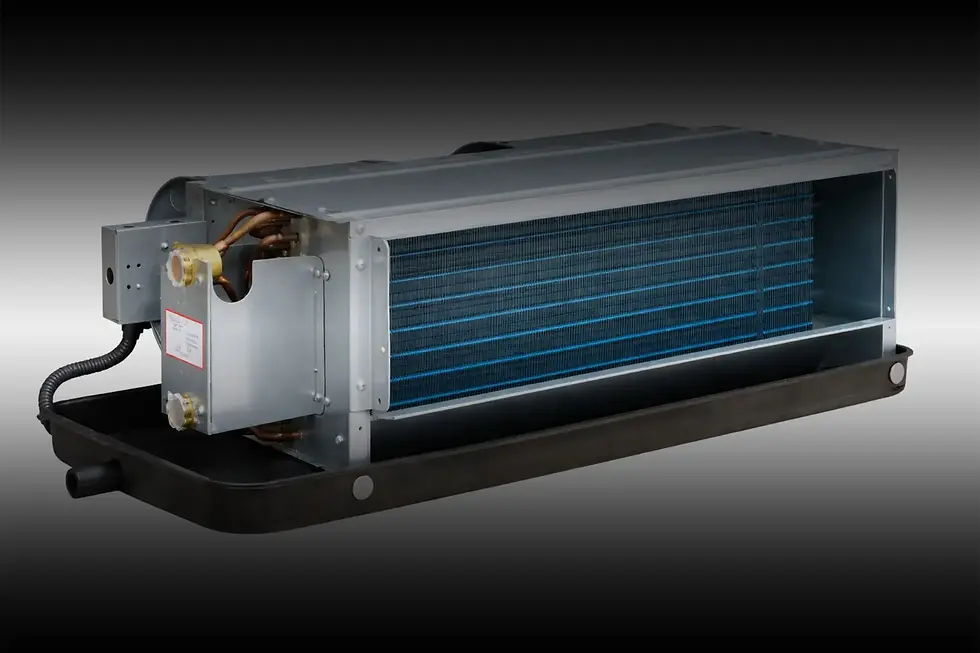
An air handling unit (AHU) is a central component of a commercial HVAC system that conditions and distributes air throughout a building. AHUs typically contain fans, coils, filters, and controls that work together to regulate airflow, temperature, and indoor air quality.
Unlike packaged rooftop systems, air handling units are often custom-configured to serve specific zones or building requirements. They can integrate with boilers, chillers, heat pumps, energy recovery systems, and building automation to deliver precise control over how air is moved and conditioned.
When properly engineered, an AHU becomes the control center for a building’s airflow—ensuring consistent comfort, efficient operation, and reliable performance across varying loads and occupancy levels.

CONTROLLED AIRFLOW
AHUs regulate how much air moves through a building and where it goes, supporting balanced distribution and consistent comfort across zones.
SYSTEM INTEGRATION
Air handling units are engineered to integrate with heating, cooling, ventilation, and controls—ensuring all components operate as one coordinated system.
FILTRATION & IAQ SUPPORT
AHUs house filtration and air treatment components that support indoor air quality while protecting downstream equipment from buildup.
SCALABLE PERFORMANCE
From varying occupancy to seasonal load changes, engineered AHUs adapt to real operating conditions without sacrificing efficiency or reliability.







ETS HVAC Insights
Go inside our commercial HVAC projects and discover how ETS helps Central Ohio businesses upgrade systems, solve problems, and improve building performance year-round.


Frequently Asked Questions
An air handling unit is a central HVAC component that conditions and distributes air throughout a building using fans, coils, filtration, and controls.
AHUs regulate airflow, temperature, and air quality by moving conditioned air to occupied spaces and returning air back to the system for reconditioning.
AHU vs RTU: An AHU is typically a custom-configured indoor system that relies on external heating and cooling sources, while an RTU is a packaged, self-contained unit installed on the roof that includes heating and cooling components.
AHUs are commonly installed in mechanical rooms, basements, penthouses, or dedicated indoor spaces where environmental control and service access are required.
Most AHUs include supply fans, heating and cooling coils, filters, dampers, controls, and sometimes energy recovery or humidification components.
Many commercial AHUs are custom-engineered to meet specific airflow, load, and zoning requirements, especially in larger or more complex buildings.
AHUs connect to chillers and boilers through hydronic coils, allowing centralized heating and cooling equipment to condition air distributed throughout the building.
Yes. AHUs often house filtration, UV-C light, humidity control, and air treatment components that support indoor air quality initiatives.
AHUs are commonly used in office buildings, hospitals, schools, manufacturing facilities, fitness centers, and other large commercial or institutional buildings.
Proper AHU design impacts fan energy use, airflow balance, heat transfer efficiency, and system responsiveness, all of which influence overall energy performance.
Uneven airflow, comfort complaints, excessive noise, dirty coils, control issues, or rising energy usage often indicate AHU performance problems.
In many cases, AHUs can be upgraded with improved controls, fans, coils, or air quality components to extend service life and improve performance.
AHUs should be inspected regularly as part of a preventive maintenance program, with deeper evaluations performed when building use or system demands change.
Engineered Temperature Solutions evaluates airflow, system integration, and building needs to design, install, and service AHUs that perform reliably within the full HVAC system.
Yes. Engineered Temperature Solutions designs, installs, and services air handling units for commercial and industrial facilities across Ohio, tailored to local climate and operating conditions.
Need AHU services in Central Ohio? Request a quote or call (614) 289-8733 to get started.
Frequently asked questions

Our Services
ETS provides end-to-end AHU services that support reliable airflow, precise control, and long-term system performance.
Redefine your
buildings HVAC
