.webp)

What Is a Variable Air Volume (VAV) System?
A variable air volume (VAV) system is a zoning-based HVAC air distribution strategy that regulates the amount of conditioned air delivered to individual spaces rather than running at a constant volume. By adjusting airflow in response to real-time temperature demand, VAV systems improve comfort, reduce energy consumption, and support efficient building operation.
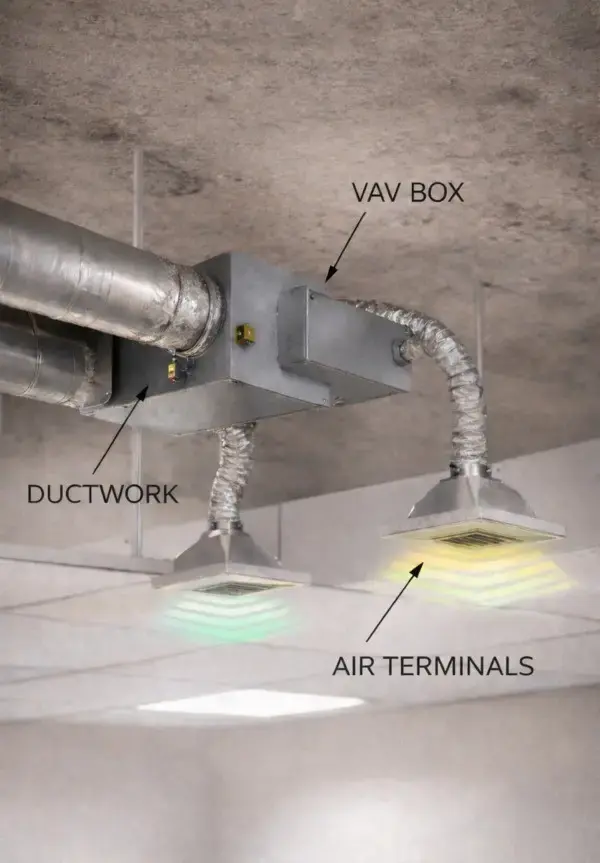
In a typical commercial VAV system, a central air handling unit supplies conditioned air to multiple zones. Each zone is served by a VAV box that modulates airflow based on thermostat input. Some VAV boxes also include reheat capabilities to fine-tune temperature control without over-conditioning the entire building.
When properly engineered, VAV systems allow large facilities to respond dynamically to occupancy changes, internal heat loads, and seasonal conditions—making them a cornerstone of modern commercial HVAC design.
ZONED COMFORT
Each space receives the airflow it needs based on actual demand, reducing hot and cold complaints across the building.
ENERGY EFFICIENCY
By lowering airflow during low-demand periods, VAV systems significantly reduce fan energy and overall HVAC operating costs.
PRECISE CONTROL
Integrated controls and sensors allow VAV boxes to respond instantly to temperature changes and occupancy conditions.
SCALABLE DESIGN
VAV systems adapt easily to building expansions, space reconfigurations, and evolving usage without major system overhauls.

Our Services
ETS delivers complete VAV solutions that maximize comfort, reduce energy waste, and keep buildings operating efficiently.
🚩VAV SYSTEM Red Flags
When Should a VAV System Be Evaluated or Serviced?
Key Indicators Your VAV System Needs Attention:
-
VAV boxes hunting, sticking, or failing to respond
-
Hot or cold complaints in individual zones
-
Excessive reheat use or temperature swings
-
Noisy airflow or damper-related sounds
-
Rising energy costs without occupancy changes
VAV system issues often appear as comfort complaints or efficiency losses long before equipment failure occurs.
Hunting or Unresponsive Boxes
Dampers, actuators, or controls may be failing or miscalibrated.
Uneven Zone Temperatures
Airflow is not being properly modulated at the VAV box level.
Heavy Reheat Use
The system may be overcooling and compensating inefficiently.
Noise Complaints
Air velocity or damper control issues are creating turbulence.
Higher Energy Use
Poor VAV control is forcing the system to work harder than necessary.






ETS HVAC Insights
Go inside our commercial HVAC projects and discover how ETS helps Central Ohio businesses upgrade systems, solve problems, and improve building performance year-round.


Frequently Asked Questions
A VAV system controls the amount of air delivered to individual zones based on temperature demand, improving comfort and energy efficiency in commercial buildings.
A central air handler supplies conditioned air while VAV boxes at each zone modulate airflow in response to thermostat signals.
A VAV box is the terminal device that regulates airflow to a specific zone and may include a damper, controls, and optional reheat coil.
A constant volume system delivers the same airflow at all times, while a VAV system adjusts airflow based on real-time demand.
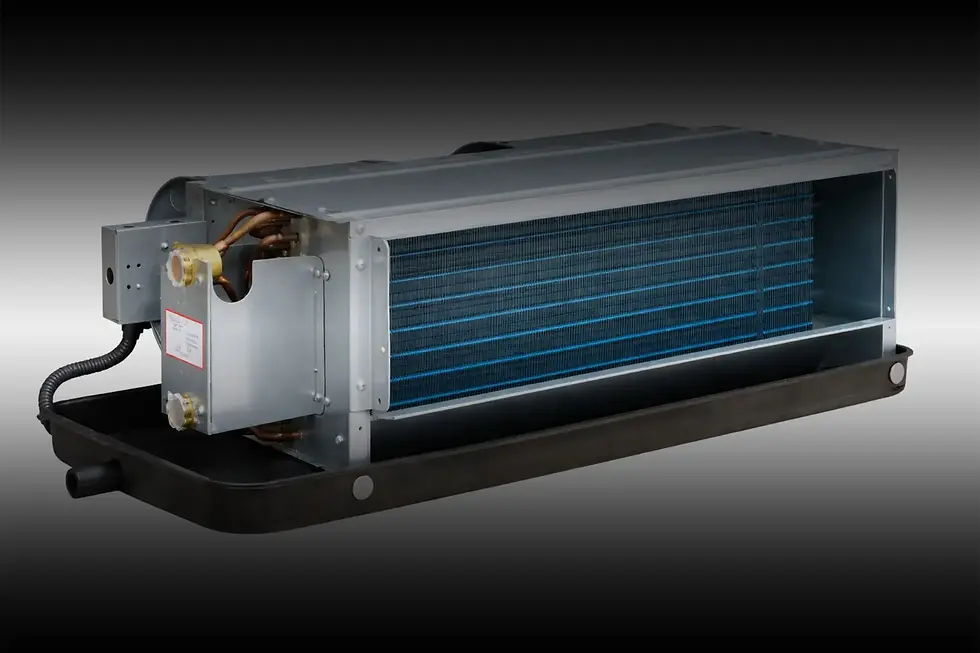
VAV systems regulate airflow from a central air handler, while fan coils provide localized heating and cooling using dedicated coils and fans.
VAV systems are widely used in office buildings, schools, healthcare facilities, warehouses, and large commercial spaces with multiple zones.
Yes. By reducing airflow during low-demand periods, VAV systems significantly reduce fan energy and overall HVAC operating costs.
A VAV reheat box includes a heating coil that allows precise temperature control without increasing airflow to the zone.
VAV boxes communicate with the BAS to receive temperature inputs, adjust airflow, and coordinate with the central HVAC system.
Hot or cold spots, noisy airflow, unresponsive zones, excessive reheat use, or rising energy costs often indicate VAV issues.
In many cases, airflow balancing, control tuning, or component upgrades can restore performance without full system replacement.
VAV systems should be inspected regularly as part of preventive maintenance, especially in buildings with changing occupancy or layouts.
Proper zoning ensures airflow is delivered efficiently to each space, while poor zoning can lead to comfort complaints and energy waste.
Engineered Temperature Solutions evaluates zoning, airflow, controls, and system integration to deliver VAV solutions optimized for comfort and efficiency.
Yes. Engineered Temperature Solutions designs, installs, and services variable air volume systems for commercial facilities across Ohio, tailored to local climate and building needs.
Need VAV system services in Central Ohio? Request a quote or call (614) 289-8733 to get started.
Frequently asked questions
Every Air Handling Need.
One Reliable Team.
Redefine your
buildings HVAC
