.webp)

What Is an Heat Recovery Ventilator?
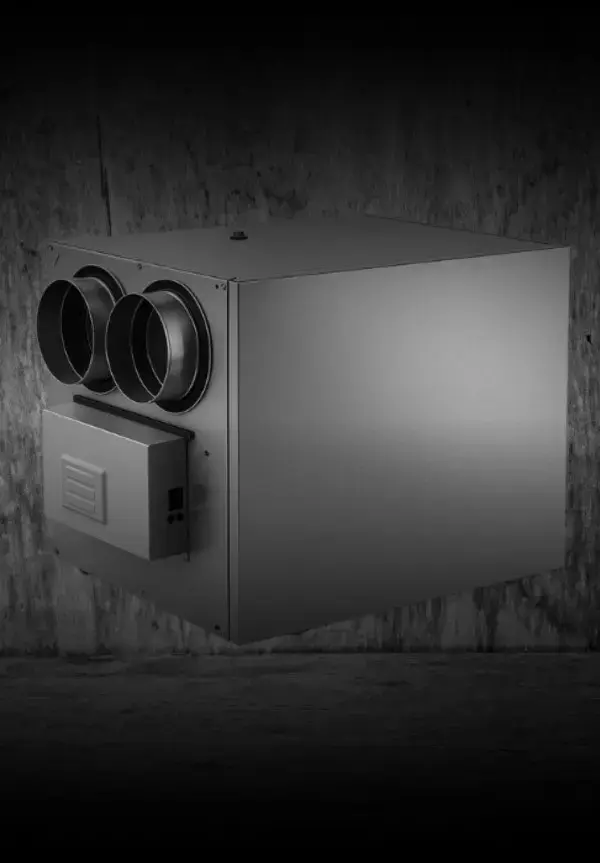
A heat recovery ventilator (HRV) is a mechanical ventilation system that exchanges stale indoor air with fresh outdoor air while recovering heat from the exhaust air stream.
Unlike energy recovery ventilators, HRV systems transfer sensible heat only—not moisture—making them ideal for colder, drier environments or buildings where humidity control is managed by other systems.
HRVs support healthy ventilation by maintaining airflow balance and reducing heating losses caused by continuous fresh air intake, especially during winter operation.

Fresh Air, Recovered Heat
Heat recovery ventilators bring in outdoor air while capturing heat from exhaust air, reducing heat loss and supporting efficient winter ventilation.
Balanced Airflow Control
HRV systems maintain proper supply and exhaust balance, helping stabilize building pressure and deliver consistent ventilation across occupied spaces.
Cold-Climate Performance
Designed for colder, drier conditions, HRVs support ventilation without adding moisture, making them ideal where humidity is managed separately.
Commercial-Grade Integration
ETS engineers HRV systems to integrate cleanly with rooftop units, air handlers, and controls for reliable, long-term commercial operation.

Our Services
ETS provides complete HRV services that deliver fresh air, maintain balance, and reduce heat loss across commercial facilities.
🚩HRV Red Flags
When Should You Service, Upgrade, or Add an HRV System?
Key Indicators Your Building’s Ventilation Needs Attention:
-
Stale or insufficient fresh air
-
Rising heating costs during winter
-
Drafts or pressure imbalance complaints
-
Ventilation running without heat recovery
-
Aging or undersized ventilation equipment
Heat recovery ventilators play a critical role in delivering fresh air while minimizing heat loss. When HRV systems are outdated, improperly sized, or poorly integrated, buildings can experience comfort issues, energy waste, and excessive heating demand—especially in cold-weather operation.
ETS provides engineered HRV diagnostics, system optimization, and upgrade solutions to restore balanced ventilation and efficient heat recovery.
Poor Air Quality
Outdoor air delivery is inadequate or not properly distributed throughout the building.
Winter Energy Loss
Ventilation air is entering without effective heat recovery, increasing heating load and cost.
Airflow Imbalance
Supply and exhaust airflow are not properly balanced.
No Heat Recovery
Fresh air is being introduced without capturing usable heat from exhaust air.
Outdated Equipment
The HRV system can no longer meet current airflow or efficiency requirements.

All Your Ventilation Needs.
One Reliable Team.






ETS HVAC Insights
Go inside our commercial HVAC projects and discover how ETS helps Central Ohio businesses upgrade systems, solve problems, and improve building performance year-round.


Frequently Asked Questions
A heat recovery ventilator (HRV) is used to provide continuous fresh air while reducing heat loss caused by ventilation. HRVs are especially effective in colder climates and buildings with controlled humidity requirements.
Unlike basic exhaust systems that remove air without recovery, an HRV captures heat from outgoing air and transfers it to incoming outdoor air, significantly improving energy efficiency.
HRV systems recover heat during winter operation, helping prevent large heating losses while maintaining proper ventilation. This makes them ideal for regions with long heating seasons.
No. HRVs transfer heat only, not moisture. They are best suited for buildings where humidity is managed separately or where excess moisture is not a concern.
HRVs are commonly installed in:
-
Warehouses and distribution centers
-
Manufacturing and industrial facilities
-
Schools and municipal buildings
-
Office buildings with controlled humidity
-
Cold-storage-adjacent facilities
Yes. By preheating incoming air with recovered heat, HRVs reduce the load placed on heating equipment, which can lower fuel consumption and operating costs during winter months.
Yes. HRV systems can operate year-round, but their largest efficiency benefits occur during the heating season when outdoor air temperatures are significantly lower than indoor conditions.
Improper sizing of a heat recovery ventilator can cause:
-
Airflow imbalance
-
Pressure issues
-
Reduced heat recovery efficiency
-
Increased fan energy use
Correct engineering and commissioning are critical for proper HRV performance.
HRVs are designed to supply and exhaust equal volumes of air, helping maintain neutral building pressure and reducing infiltration or exfiltration issues.
Routine HRV maintenance typically includes:
-
Filter replacement
-
Heat exchanger inspection and cleaning
-
Fan and motor performance checks
-
Damper operation verification
-
Controls and airflow validation
Yes. HRVs are commonly integrated with RTUs and AHUs to support fresh air delivery while minimizing heating losses during ventilation.
Engineered Temperature Solutions evaluates building use, airflow demand, climate conditions, humidity control strategy, and existing HVAC equipment to determine whether an HRV is the best ventilation solution.
Professional commissioning ensures:
-
Balanced supply and exhaust airflow
-
Proper heat recovery operation
-
Accurate control sequencing
-
Stable pressure control
-
Reliable long-term performance
Yes. HRVs can be paired with CO₂ sensors and building automation systems to adjust ventilation rates based on occupancy while still recovering heat efficiently.
Yes. Engineered Temperature Solutions provides HRV design, installation, commissioning, and service for commercial buildings across Columbus and Central Ohio, supporting efficient, code-compliant ventilation.
Need HRV services in Central Ohio? Request a quote or call (614) 289-8733 to get started.
Frequently asked questions
Redefine your
buildings HVAC
